The Genesis and the Eternals Era
In the primordial epoch of Lotharren, the Eternals stood as the inaugural custodians of the world, beings of unmatched intellect and physical prowess, unparalleled by any race that would follow. Unlike the races that would come to inherit their world, the Eternals were devoid of magical capabilities, their strength lying in their inherent abilities and the intricate societal structure predetermined by their roles. A warrior Eternal, for instance, embodied the zenith of martial excellence, while a scholar’s wisdom stretched the bounds of knowledge and understanding.
Central to the cycle of Eternal life was the Eternium, a sanctum of rebirth that ensured the continuity of their kind. Upon the death of an Eternal, the Eternium would respond, birthing a new Eternal to fill the void left behind. This cycle underscored the immortality of the Eternals, a race bound not by the fleeting nature of life but by an enduring legacy that wove through the fabric of Lotharren’s history.
The God King’s Burden and Curiosity
The stewardship of Lotharren’s magic fell upon the shoulders of the God King, a figure elevated not just by status but by the critical duty entrusted to him—the redistribution of the world’s magic from an infinite pool. This magic was the lifeblood of Lotharren, essential for the world’s vitality and balance. Initially, the God King adhered to his duty with unwavering diligence, ensuring the magic’s flow remained uninterrupted, nurturing the land and its inhabitants.
However, the narrative of the God King and the magic pool took a pivotal turn when curiosity began to eclipse duty. The seemingly inconsequential act of absorbing a portion of the pool’s magic revealed no immediate adverse effects on the world, emboldening the God King. The lack of visible detriment, combined with the allure of the magic’s potent effects on his being, led him down a path of gradual excess. The magic, once a source of sustenance for the land, became akin to a drug for the God King, each absorption enhancing his strength and granting him powers beyond the ken of mortal or Eternal alike. This growing dependency on the pool’s magic, while initially perceived as harmless, was the genesis of a creeping calamity.
Artifacts, the Pool, and the Birth of Legends
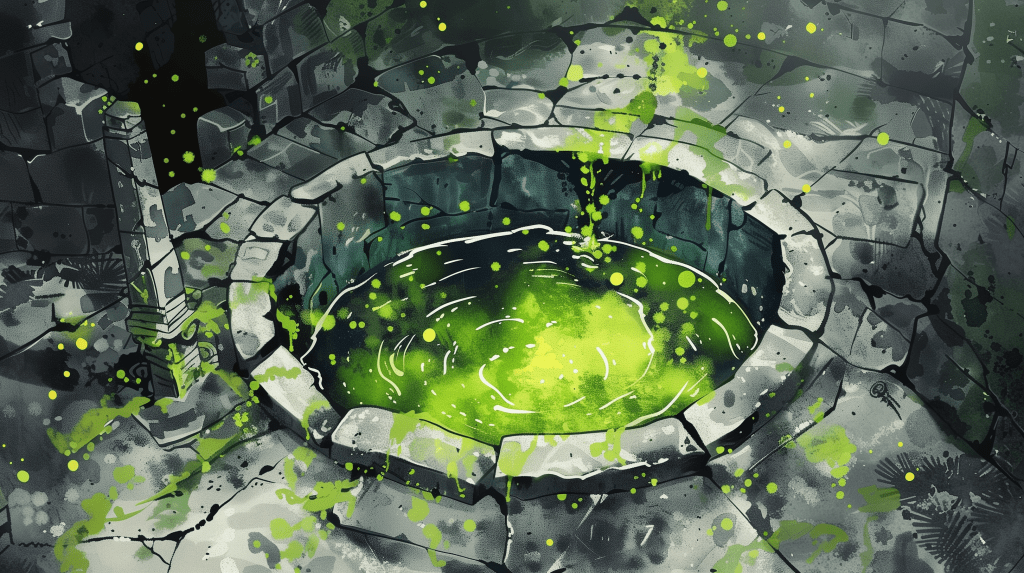
In the depths of his experimentation and the newfound zenith of his powers, the God King embarked on acts of creation within the very source of his strength—the magic pool. He crafted artifacts of immense might and imbued them with the pool’s magic, each artifact destined for his governors, a testament to their loyalty and their roles in the governance of the Eternals. Alongside these artifacts, the God King introduced eggs into the pool, from which emerged legendary pets, each bound to a governor, becoming symbols of their power and companions in their rule.
Eren’s Discovery and the God King’s Response
Among the Eternals, a scholar named Eren made a groundbreaking discovery—the essence and purpose of magic and its critical role in sustaining Lotharren itself. The revelation that the world was bleeding magic, leading to its slow demise, demanded urgent action. However, when Eren presented his findings to the God King, the response was not one of resolution but of repression.
Eren’s groundbreaking discovery—that Lotharren was hemorrhaging magic at a rate that threatened its very existence—set a chain of events into motion. Crucially, Eren and the governors were unaware of the God King’s role in this depletion. Eren simply knew the world was in peril, not the cause. The God King, however, misinterpreted Eren’s discovery as a direct threat to expose his misuse of the magic pool. In a bid to preemptively silence what he perceived as an imminent accusation, he buried Eren alive, opting for a punishment that would not incite suspicion among the immortals due to their cycle of rebirth via the Eternium.
The Governors’ Suspicions and the God King’s Miscalculation
When the governors, bearing the weight of leadership and the well-being of their domains, learned of the magic’s disappearance, they did not immediately link the crisis to the God King’s actions. However, their knowledge of the artifacts and pets bestowed upon them by the God King sowed seeds of suspicion. These suspicions, though not explicitly accusing the God King of malfeasance, were enough to make him feel cornered once more, mirroring his reaction to Eren’s discovery.
Convinced that confrontation was inevitable and misjudging his ability to overpower his governors, the God King initiated the cataclysmic conflict, believing in the supremacy of his acquired magical prowess over the collective might and wisdom of the governors.
The Battle and Its Aftermath
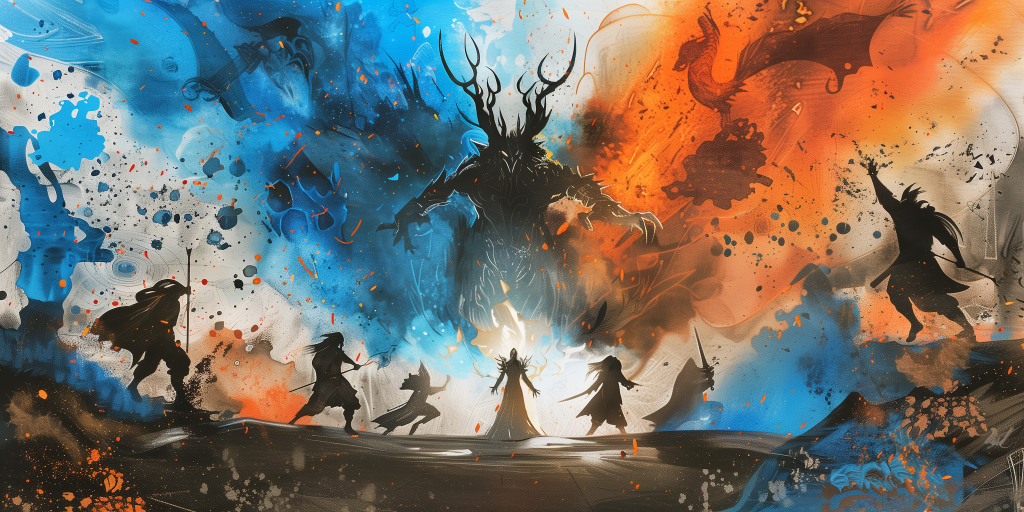
The conflict, known as the Great Battle of the Gods, saw the fall of two governors, a significant loss felt deeply among the ranks. Their demise was not the end, however, as the Eternium, the sanctum of Eternal rebirth, responded by birthing successors to fill the void left behind. These new governors inherited the weapons of their predecessors, symbols of their roles and responsibilities, but not the pets bound to the souls of the fallen, which, lost without their masters, wandered into the wilds of Lotharren.
The Burial of the God King and Eren’s Proximity
In the aftermath of the battle, the victorious governors faced the task of dealing with the God King’s remains. Choosing a burial site, they inadvertently laid him to rest close to Eren, the scholar whose pursuit of truth had set these events in motion. This proximity, unbeknownst to them, would later forge a link to the past, holding keys to unresolved mysteries and untapped powers.
The Division of Magic and the Rise of the Septenniel
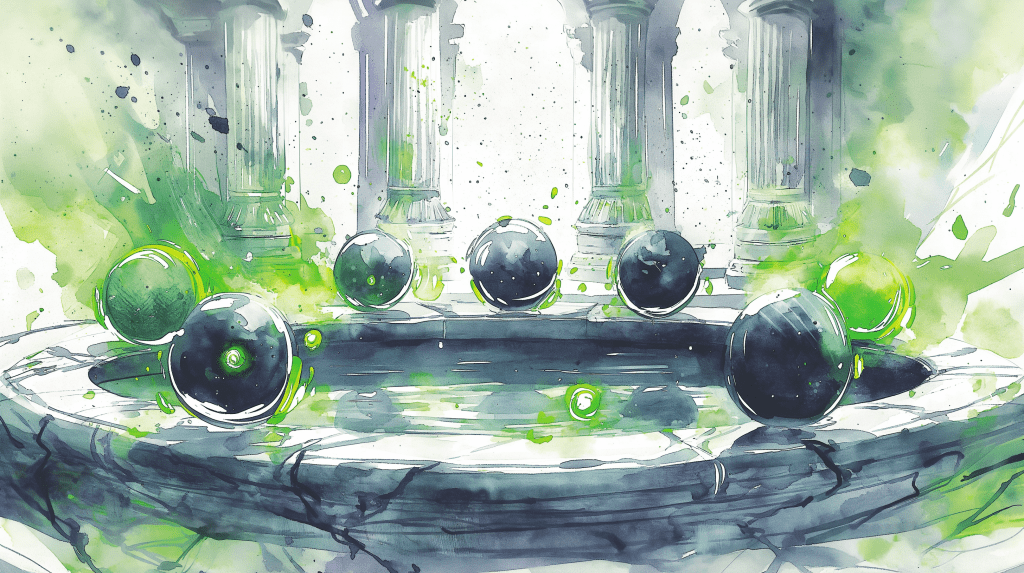
With the world still hemorrhaging magic, the governors, now devoid of their erstwhile leader, grappled with their lack of understanding regarding the redistribution of the magic pool—a duty exclusively known to the God King. Faced with a world on the brink, they resolved to prevent any single entity from monopolizing power as the God King had. The decision to split the magic pool into seven equal orbs and consume them was born out of a desire for balance and a pragmatic approach to governance, avoiding past mistakes and equipping themselves for the monumental task of restoration.
The Septenniel’s Mission
Transformed into deities by the orbs’ power, the newly formed Septenniel embarked on their mission to uncover the cause of the world’s magical depletion and to find a means to replenish it. This journey, marked by the challenges of newfound godhood and the imperative to heal Lotharren, signified the beginning of an era defined by a collective quest for understanding, balance, and the restoration of a world teetering on the edge of calamity.
.
The Era of the Septenniel and the Birth of New Races
The World Without the God King
In the wake of the great battle and the God King’s demise, the Septenniel faced the monumental task of stabilizing a world that was no longer sustained by the regular infusion of magic. Unknown to them, the essence of magic that once seamlessly circulated, courtesy of the God King’s interventions, had ceased its flow, leaving them with a world gradually ebbing towards desolation.
The Unrest Among the Eternals
Following the demise of the God King and the ascension of the governors to their new roles as the Septenniel, Lotharren found itself at the dawn of a new era. However, this transition was far from seamless. The Eternals, once led with a clear purpose under the dominion of the God King and the governors, began to sense the void left in the wake of their ruler’s death. The dissemination of magic, a task solely understood and executed by the God King, had ceased, leading to a gradual decline in the world’s vitality—an alarming change that did not go unnoticed.
The Eternals’ growing awareness of the magic’s depletion, coupled with the sudden absence of their divine leader’s guidance, sowed seeds of unrest. Questions loomed large, and answers were scarce, as the Septenniel grappled with the mysteries of magic distribution—a knowledge that had died with the God King.
The Septenniel’s Attempt to Suppress the Unrest
Initially, the Septenniel sought to quell the rising tide of dissent among the Eternals through pacification and suppression. Their efforts to maintain order and stability, however, were met with escalating resistance. The Eternals, once harmonious in their predestined roles, now found themselves divided, their faith in leadership shaken by the unfolding crisis and the lack of transparency regarding the world’s waning magic.
The Decision to Eradicate the Eternals
Faced with an insurmountable challenge and the potential for widespread chaos, the Septenniel made a choice that would forever alter the fabric of Lotharren—rather than continuing their attempts at suppression, they resolved to eradicate the Eternals. This decision, born from a complex mix of desperation to preserve the remaining magic, fear of rebellion, and a calculated, albeit grim, assessment of the risks posed by continued unrest, marked a dark chapter in the history of Lotharren.
The execution of this resolution was as swift as it was brutal. The Septenniel, wielding their newfound divine powers, unleashed their might upon their own kind. The conflict that ensued was nothing short of a massacre, an inhuman culling that saw the near-total annihilation of the Eternals. Among the Septenniel, Ephesius emerged as the most ruthless, his actions ensuring that any surviving Eternals were few and far between.
The Aftermath and the Echoes of a Lost Race
In the aftermath of this eradication, Lotharren was left without its original inhabitants, its first children. The world, now bereft of the Eternals’ presence, faced an uncertain future, the actions of the Septenniel casting long shadows over the realms. This decision, while stemming the immediate tide of revolution, sowed the seeds of profound guilt, regret, and moral contemplation among the gods.
The legacy of the Eternals, though nearly extinguished, lived on in hidden corners of the world, in whispered legends, and in the hearts of the few who survived, like Lord Protector Boros. The guild of artificers’ eventual discovery of Eren would also serve as a poignant reminder of the Eternals’ existence and the catastrophic choices that led to their downfall.
The Creation of the Modern Races
In the aftermath of their harrowing decision to eradicate the Eternals, the Septenniel faced the monumental task of healing a world still suffering from the mysterious depletion of its magical essence. This pursuit consumed their focus, a quest marked not by days, years, or centuries, but by eons of tireless search across the expanse of Lotharren. They scoured the depths of the earth, soared through the endless skies, and delved into the realm’s most arcane secrets, yet the solution to the magic’s waning remained elusive, a shadow just beyond the grasp of even their divine reach.
As the epochs unfurled, the relentless pursuit began to wear on the Septenniel. The initial unity and purpose that had bound them in their divine ascension gave way to weariness and disillusionment. For some, the endless quest without sight of resolution or success chipped away at their resolve, leading to a gradual, but profound, shift in focus. The stark realization that their endeavors might be in vain dawned upon them, sparking debates and divisions amongst the gods.
It was within this climate of growing despair that one among the Septenniel, moved by a blend of curiosity and perhaps a yearning for a legacy beyond their failed quest, chose to channel their remaining powers into the creation of a new race. Thus, the humans were born, a race imbued not with the physical prowess or immortality of the Eternals but with a resilience and adaptability that was uniquely their own. To the gods’ astonishment, these new beings carried within them sparks of magic, faint echoes of the very essence the Septenniel had so desperately sought to restore to the world.
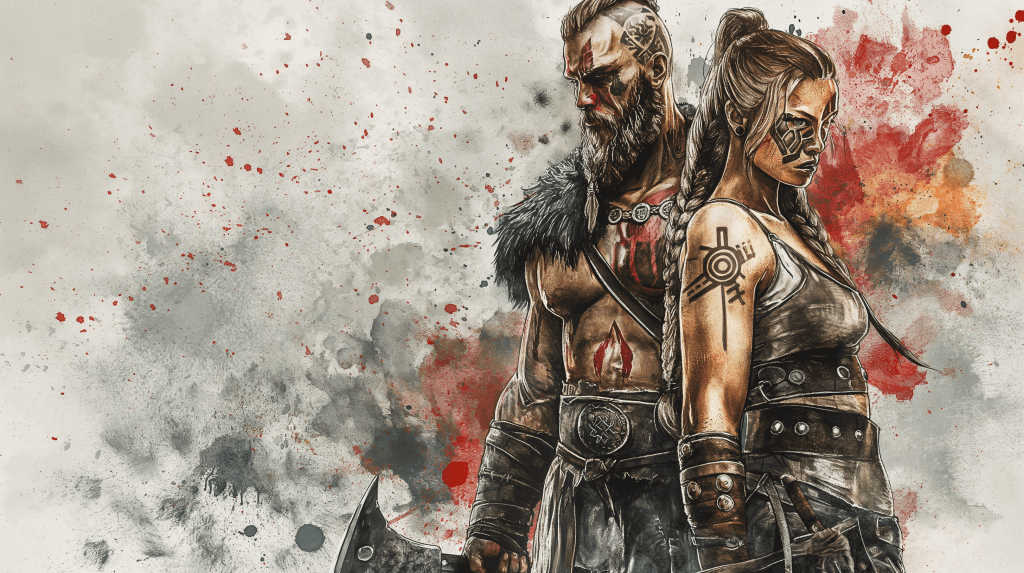
Encouraged by this unexpected development, three other gods, inspired by their peer’s initiative and intrigued by the potential of these emergent magical traces, decided to craft races of their own. The norn, azuri, and elves came into existence, each reflecting the distinct aspects of their divine creators and the environments they were meant to inhabit. Like the humans, these races bore within them the nascent seeds of magic, a discovery that rekindled a sense of purpose and wonder among the Septenniel.
This creation of the modern races marked a turning point in the history of Lotharren. No longer solely custodians of a fading legacy, the Septenniel found themselves guardians of a new world order, stewards of races whose very existence defied the despair that had once threatened to consume the gods. The humans, elves, norn, and azuri, each carrying the gift of magic, albeit in a form far different from the raw power that had characterized the era of the Eternals, offered a new chapter in the saga of Lotharren.
Magic Among the Modern Races
As these new beings flourished and civilizations emerged, it became evident that magic had not vanished entirely from Lotharren. Echoes of the ancient power manifested sporadically among individuals across the modern races, mirroring, albeit faintly, the godly might once wielded by the God King. This resurgence of magic, though less potent, sowed the seeds of both wonder and discord among the races, each adapting to its presence in their own unique ways.
The Golden Era and the Fading of the Septenniel
What followed was a period often referred to as the Golden Era, characterized by the Septenniel’s active engagement with the world. Gods walked among their creations, guiding, protecting, and sometimes ruling over them. This era saw the flourishing of cultures, the forging of legends, and the deepening of the races’ connections to the divine.
However, as time wore on, the magical essence orbs that had elevated the Septenniel began to wane, their powers diminishing with each passing century. Recognizing their fading influence and the stability of the civilizations they had nurtured, most of the Septenniel withdrew from Lotharren, retreating to a realm known as Olympus, a sanctuary created during the revolution to shield them from the Eternals’ uprising.
The Sacrifice of Pythia and the Legacy of the Gods
Among the tales of this time, one of the most poignant involves Pythia, the goddess revered by the elves. In a selfless act to protect her people from an invasion, she sacrificed her divine essence, giving birth to the Tree of Life, an eternal bastion of protection for the elven forests. Her artifact, capable of instant regeneration, became the heart of this tree, symbolizing the enduring presence and sacrifice of the gods.

A World in Flux
Lotharren, now teeming with life yet absent its divine stewards, entered an age of conflict, discovery, and ambition. The remnants of the Septenniel’s influence persisted, manifesting in religions, cults, and the continued reverence for the gods among the modern races. Magic, once the exclusive domain of the Eternals and their gods, had become a common thread weaving through the fabric of every race, a source of power, contention, and wonder.
Discovery of Eren
In an era defined by exploration and the quest for knowledge, the Guild of Artificers, a collective dedicated to unraveling the mysteries of magic and history, made a groundbreaking discovery. Unearthing the long-buried Eren, they inadvertently reconnected with a direct lineage to the Eternals. Eren, his memory obliterated by the eons spent entombed, emerged not merely as a relic of the past but as a being infused with potential, his proximity to the God King in death having imbued him with a semblance of the divine power that once threatened to unmake the world.
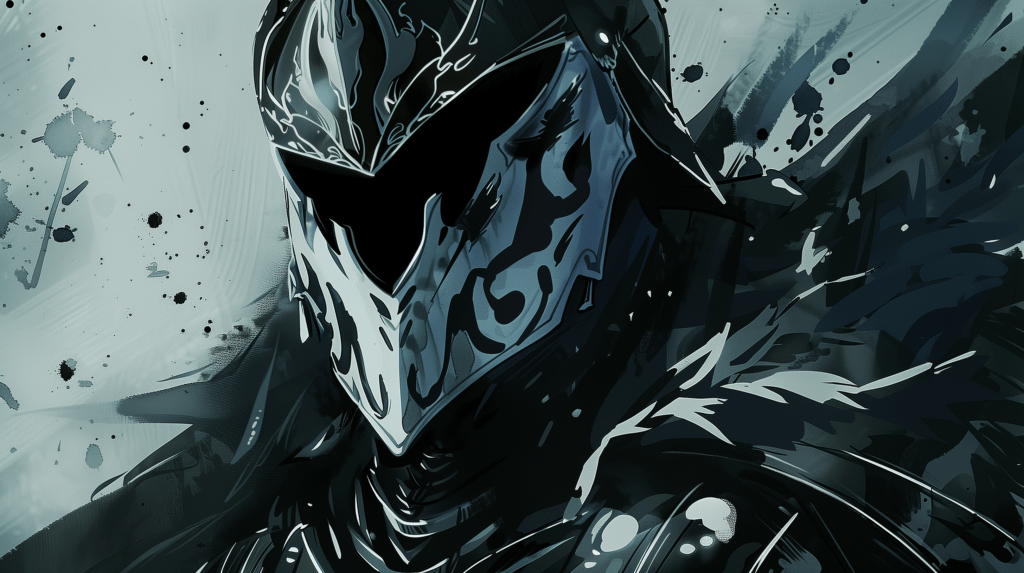
Lord Protector Boros: The Last Eternal
Parallel to Eren’s reawakening is the enigmatic presence of Lord Protector Boros, the supreme general of the Eternals and a warrior without equal. Surviving the annihilation that claimed his people, Boros serves in silent vigilance as the guardian of the current emperor, his loyalty unwavering, his purpose singular. Yet, his existence is a testament to the incomplete victory of the Septenniel, a living reminder of the Eternals’ indomitable will.
The Modern Era: A Tapestry of Conflict and Quests for Power
The Emergence of Alice
Into this world steps Alice, a figure around whom the fate of Lotharren begins to pivot. Her unique ability to amplify the magical aura of others by a hundredfold marks her as a beacon for all who seek dominion over Lotharren. Kings, cultists, and even the gods, now distant observers from their Olympus, turn their gaze towards her, seeing in her power the key to ultimate control or the catalyst for unfathomable change.
The Return of the Gods
The prospect of Alice’s power prompts a stir within Olympus, compelling the gods to contemplate one last descent into the mortal realm. Their once-dominant essence, now diminished, contrasts starkly with the raw potential Alice embodies. This convergence of divine interest and mortal ambition sets the stage for a conflict of both cosmic and personal scale, as the gods, the remnants of their creations, and new players on the world stage vie for a future that remains uncertain.
Eren’s Quest for Vengeance and Identity
Eren, grappling with the fragmented pieces of his past and the burgeoning power within him, stands at a crossroads between vengeance against the gods for their perceived betrayals and the pursuit of a new purpose. His journey is emblematic of Lotharren’s own search for meaning in the shadow of its divine and eternal legacies.
Boros’s Dilemma
Similarly, Boros faces the ultimate test of loyalty and duty. His discovery of the emperor’s sinister pursuits, propelled by the whispered guidance of Ephesius, challenges him to reconsider the nature of protection and to whom his allegiance truly belongs. The looming conflict forces Boros to confront his own identity and purpose in a world far removed from the one he once knew.
The Fate of Lotharren
As these individual stories intertwine with the larger tapestry of Lotharren’s history, they raise questions about the nature of power, the essence of loyalty, and the potential for redemption and change. The world stands on the brink of a new era, shaped by the decisions of those who wield ancient magic, those who seek to control it, and those who wish to protect it.
 Lotharren
Leave a comment